

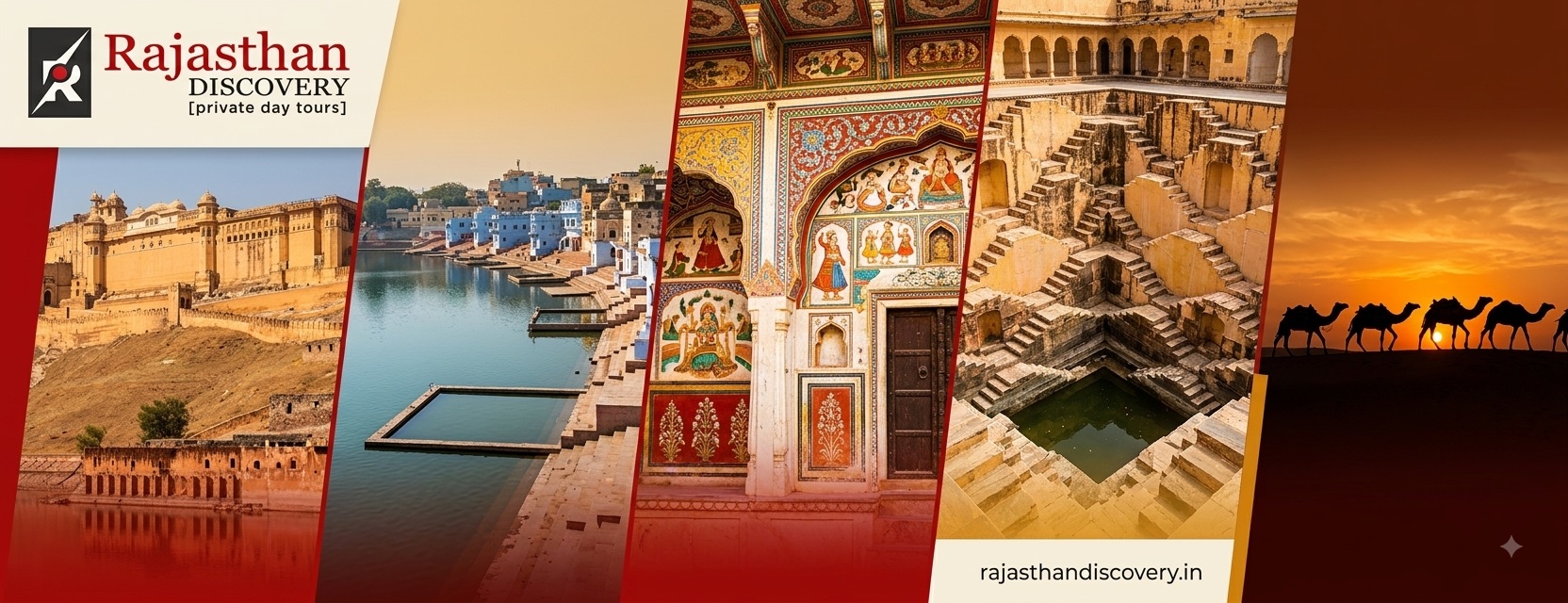
Why Should You Choose Rajasthan Tour Packages?
Rajasthan looks exactly like the pictures. Then it surprises you anyway. The forts are taller in person, the desert stays quieter than you’d think, and the food has a kick no photo ever manages to capture. Anyone who wants to actually see this state, instead of losing three days figuring out bus routes and arguing with a taxi driver over fare, usually ends up looking at Rajasthan Tour Packages at some point. Not because it’s glamorous. Because it works.
What Makes Rajasthan Tour Packages Worth Considering
People like to think planning their own trip gives them more freedom. Sometimes it does. But Rajasthan is bigger than most first-time visitors expect, and the distances on a map lie a little. A drive that Google shows as ninety minutes can stretch to three hours once you factor in a two-lane highway shared with a camel cart, a broken-down truck, and a cow that has decided the middle of the road is a fine place to sit. Packages exist mostly because someone already learned these roads the hard way. They know when a fort actually gets crowded, which routes to skip during a festival weekend, and where the “shortcut” isn’t one.
Then there’s timing. Several forts close their gates by five. Certain desert stretches are miserable to drive through between noon and 3 p.m. from April onward. None of this is obvious until you’ve already lost an afternoon to it. A decent package just… accounts for these things ahead of time, so nobody’s standing outside a locked gate wondering what happened.
Planning a Trip to Rajasthan
Worth asking yourself early on: what kind of Trip to Rajasthan do you actually want? Some people want forts and palaces, full stop. Others want dunes and silence. And a fair number just want to slow down – fewer stops, more time sitting somewhere with a cup of chai, watching the day go by. All three are possible here, sometimes on the same itinerary. Jaipur, Udaipur, and Jodhpur handle the architecture and royal history end of things. Jaisalmer and the dunes around it cover the desert. And the smaller towns most first-timers skip? Those end up being the part people talk about most once they’ve actually gone.
Jaipur to Pushkar Tour
A route that comes up a lot, especially from people who’ve been to Rajasthan before: the Jaipur to Pushkar Tour. It’s roughly 150 kilometres, and the drive itself isn’t bad – small villages, open fields, the odd roadside stall selling tea. Pushkar shows up near its lake, known for the ghats, the temple dedicated to Brahma (one of very few in the country), and a stillness that settles in once the camel fair crowds have gone home. It’s a shorter add-on compared to the big city-to-city hops, but it shifts the whole pace of a trip. After days of forts and marble floors, a quiet morning by Pushkar Lake feels almost like a different trip entirely.
Shekhawati Tour
Fewer people know to ask about the Shekhawati Tour, which is honestly part of the appeal. Shekhawati gets called the open-air art gallery of Rajasthan, and for once the tourist-brochure line actually holds up once you’re standing in front of a haveli. These old merchant houses, most built between the 1800s and early 1900s, are covered top to bottom in frescoes – gods, trains, cars, hunting scenes, whatever the artist felt like experimenting with that year. Mandawa, Nawalgarh, Fatehpur – these three towns hold most of it. Walking their narrow lanes feels less like sightseeing and more like wandering through a museum nobody bothered to put walls around. It rarely makes it onto a first itinerary, which is exactly why it’s worth pushing for.
Jaipur Step Well
Away from the usual Amer Fort and Hawa Mahal circuit, a Jaipur Step Well is a different kind of thing altogether. Panna Meena ka Kund, near Amer, is the one most people accidentally stumble on – symmetrical staircases zigzagging downward in a pattern that looks almost drawn, not built. Step wells started purely practical, a way to store water in a region where rain never shows up on schedule. Somewhere along the way, that practicality turned into something closer to art. Spend twenty minutes there, away from the tour-bus crowds elsewhere in the city, and you get a different sense of how people here have always made do with very little water and turned it into something worth looking at.
How Rajasthan Discovery Plans These Journeys
Rajasthan Discovery runs as a local operator, and the whole approach is built around one idea – a trip should feel taken care of, not rushed through. Rather than pushing every traveller down the same fixed loop, the team builds each itinerary around how much time someone has and what they’re actually curious about. Sometimes that means swapping a crowded city stop for a quieter village nobody’s heard of. Sometimes it’s just adjusting drive times so nobody’s stuck in a car during the worst of the afternoon heat. Or making sure the guide walking you through a haveli actually knows its history, rather than reciting the same three lines every group hears. Mostly, it comes down to logistics done properly – transport that shows up when it says it will, hotels checked in advance, and a route that makes sense on a map instead of zig-zagging back and forth across the state for no reason.
Conclusion
Rajasthan rewards people who slow down with it, and that’s a lot easier when the logistics aren’t a constant headache in the background. Whether it’s a short trip to Rajasthan built around Jaipur and its surroundings, or something longer that stretches out to the desert towns and quieter corners like Shekhawati, a plan built on local knowledge changes the experience more than people expect going in. The forts, the step wells, the painted havelis, the lakes – they’ve all been sitting there for centuries and aren’t going anywhere. The only real question left is how much of it you want to see, and how comfortably you’d like to get there.
Frequently Asked Questions (FAQs)
Que. What’s the best time of year to visit Rajasthan?
Ans. October through March, mostly. Daytime temperatures are far more manageable then, which makes both sightseeing and desert trips genuinely enjoyable instead of something to endure.
Que. How many days does Rajasthan actually need?
Ans. Somewhere between 8 and 12 days covers the major cities plus a couple of smaller detours comfortably. If time’s tight, even 5 days can work for Jaipur, Pushkar, and one desert stop.
Que. Is Pushkar still worth it outside the camel fair season?
Ans. Yes, if anything it’s better. Without the fair crowds, the ghats and the lake are quieter, and there’s more room to just sit and take it in.
Que. Do families still live in the Shekhawati havelis?
Ans. Some do – a few have been restored into heritage stays. Others have been left half-abandoned, which oddly adds to the atmosphere rather than taking away from it.
Que. Does Panna Meena ka Kund still hold water?
Ans. Sometimes, right after the monsoon. Most of the year it’s dry, and these days it functions more as a historical site than an actual water source.


Sorry, the comment form is closed at this time.